
Srota
From OM to the Big Bang:
How Sanātana Dharma Explains the Origin of the Universe
Many people think science and spirituality are separate, but when we look closely, ancient knowledge and modern cosmology often describe the same ideas — just in different languages. In this blog, I explain the Big Bang using concepts from Sanātana Dharma (the eternal spiritual philosophy of Hinduism), while also using peer-reviewed research to keep everything grounded.
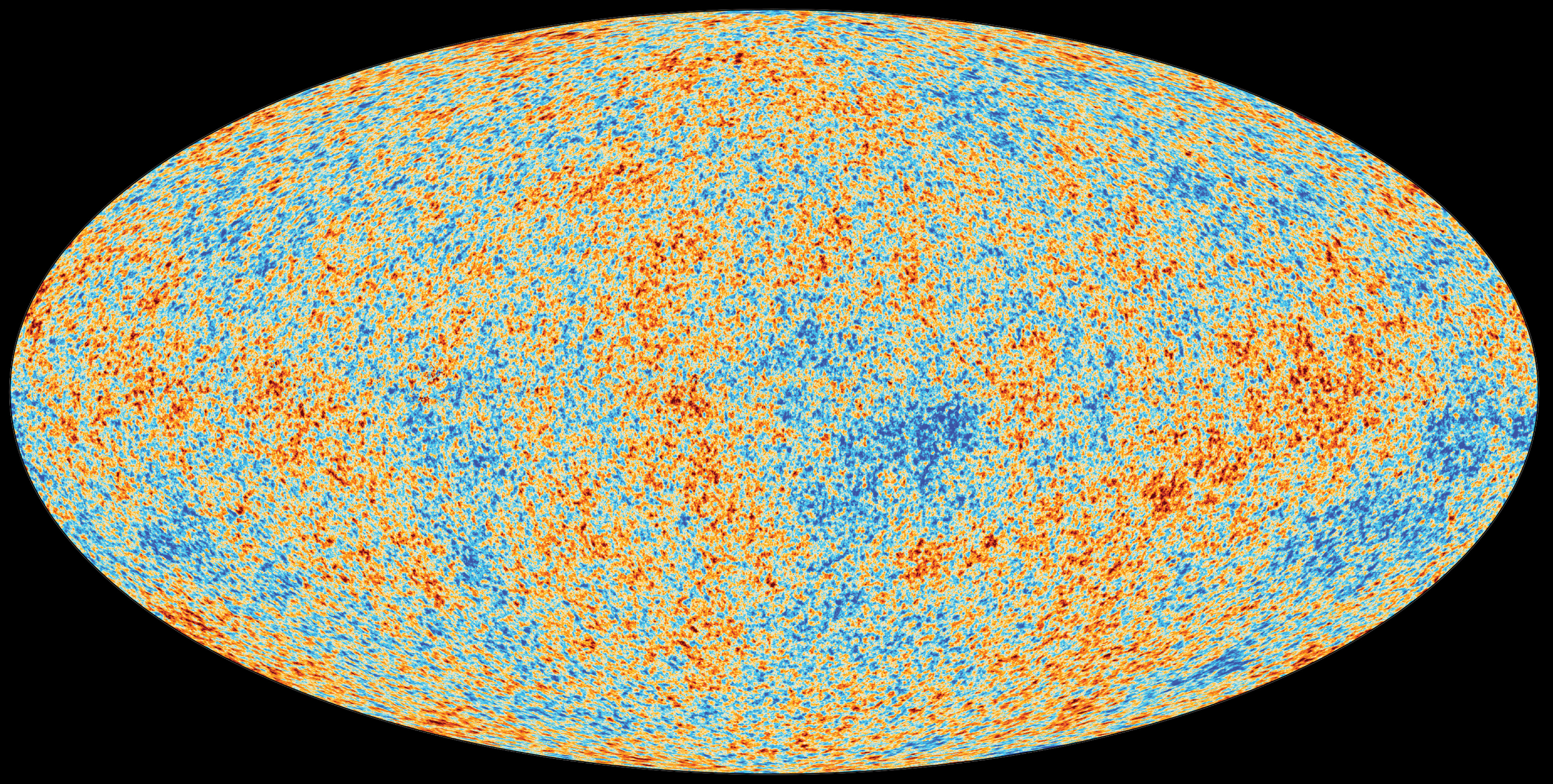
1. The Big Bang — A Quick and Simple Explanation
The Big Bang theory suggests that the universe began about 13.8 billion years ago from a single extremely tiny, hot, dense point. Scientists call this the singularity. Then, in less than a second, this point rapidly expanded and created space, matter, time, and energy (Liu, 2020; Steinhardt, 2011).
In simple terms, the universe started as: a point → a massive explosion → ongoing expansion.

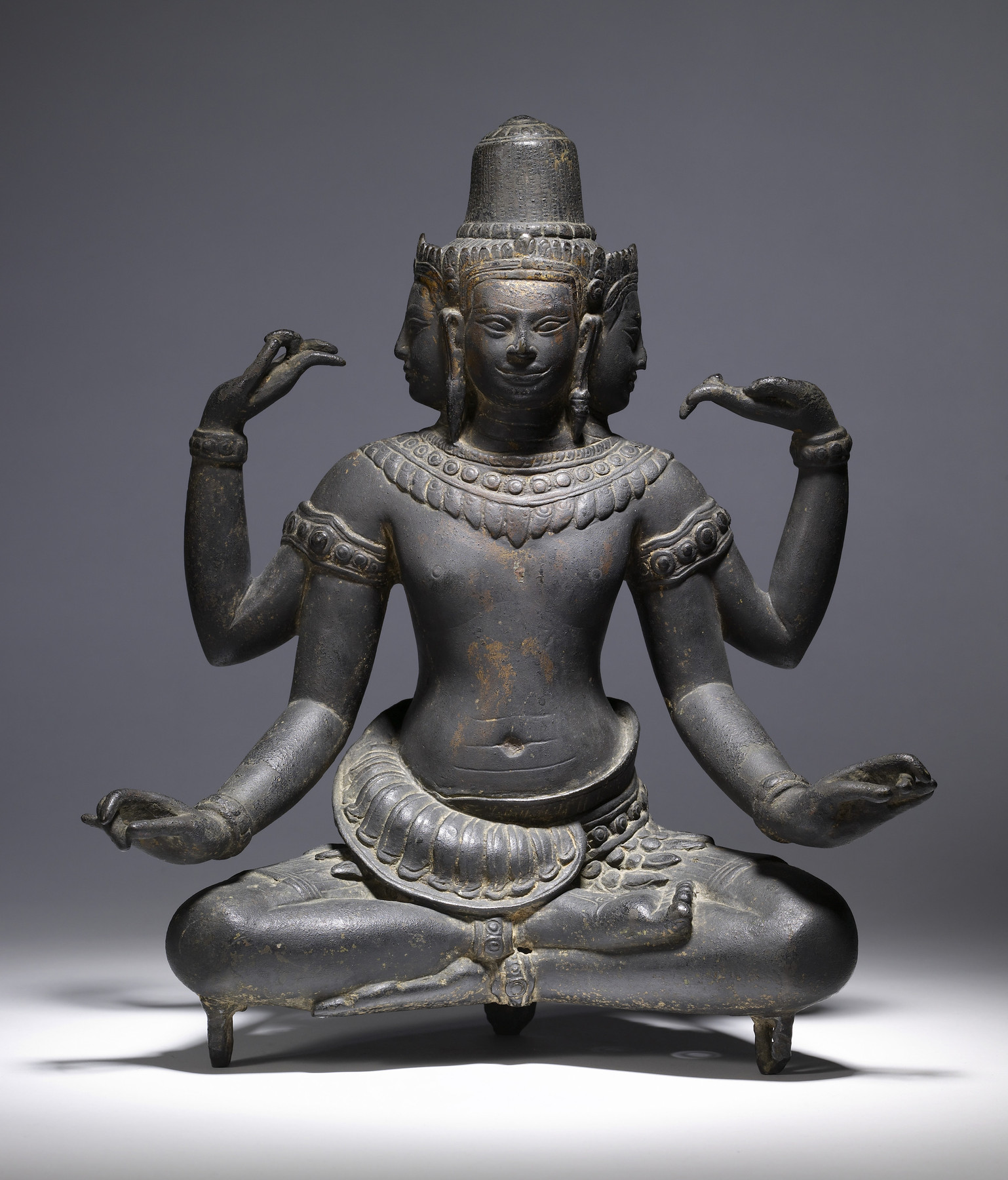
2. Sanātana Dharma’s Version — Creation Begins with Brahma

In Sanātana Dharma, creation begins with Brahma — the Creator. In English, Brahma represents the "cosmic creative force" that brings the universe into existence.
But even Brahma does not create on his own. The universe begins with a timeless state called Brahman, which means "the ultimate reality" or "pure consciousness". From this pure consciousness, a vibration emerges.
3. The First Vibration: OM (AUM)

The ancient texts say that creation begins with the sound OM (also written as AUM). In simple English, OM is the **primordial vibration** — the first sound that started everything.
Modern physics also suggests that before matter existed, vibrations and energy waves filled the early universe (Penrose, 2020; Krauss, 2012). This connection makes OM a powerful parallel to scientific cosmology.
OM has three parts:
- creation
- preservation
- dissolution or transformation
These match the Hindu trinity: Brahma (creation), Vishnu (preservation), and Shiva (transformation).
4. The Role of Saraswati — Knowledge Behind Creation

Brahma does not create randomly. He is guided by Saraswati, the goddess of wisdom, learning, music, and cosmic order. It is said that when Brahma created the universe, he got so full of himself and started bragging to all other demigods on his remarkable creation. Lord Vishu asked him to Brahma if he had missed anything in the creation. Brahma narrated that he is faultless. When lord Vishnu and his wife, Laxmi went for the inspection, Vishnu found the biggest fault. As per ancient tales, the universe lacked sound despite of its beautiful beings and movements. Brahma tried all his powers to bring sound energy to the universe, but all in vain. It made him realize his ego-centric attitude. Thus came Devi Saraswati into existence. She brought
-
Language (Vāk)
-
Music (Svara)
-
Knowledge (Vidyā)
-
Memory (Smriti)
-
Art and beauty (Kala)
-
Order and structure (Rita)
In everyday English, Saraswati symbolises: logic, structure, intelligence, and harmony.
This matches the scientific idea that the universe follows precise mathematical laws and constants — such as gravity and quantum rules — that allow creation to unfold in a predictable pattern (Hawking, 2018).
Without cosmic intelligence or structure, creation would be chaotic and nothing stable would form. Saraswati represents this “ordered intelligence” within the universe.
5. Explaining Sanskrit Words in Simple English
Sanātana Dharma — “Eternal way of life”, the spiritual philosophy behind Hinduism.
Brahman — Ultimate truth or pure consciousness.
Brahma — Creator god; represents universal creativity.
OM (AUM) — The first vibration that began creation.
Saraswati — Goddess of wisdom and structure; represents cosmic order.
6. How I Would Explain This to a Friend
Imagine telling a friend:
“Science says the universe started from a tiny point that exploded. Sanātana Dharma says creation started with a vibration, OM, which awakened Brahma — the creative force — guided by Saraswati, the force of knowledge. Both stories describe the same moment: **something came from nothing, triggered by a spark of energy**.”
This way, even someone with no background in Sanskrit or cosmology can understand how spiritual and scientific ideas often overlap.
7. Are They Really Connected?
Of course, science and spirituality use different methods, but many scholars (Steinhardt, 2011; Penrose, 2020; Fritjof Capra, 2010) argue that ancient Hindu cosmology is surprisingly close to scientific theories.
Both say:
- The universe had a beginning.
- Creation started from energy or vibration.
- The universe expands and transforms over time.
References (Peer-Reviewed & Scholarly Sources)
Capra, F. (2010). *The Tao of Physics*. Shambhala.
Hawking, S. (2018). *Brief Answers to the Big Questions*. Bantam.
Krauss, L. (2012). *A Universe from Nothing*. Free Press.
Liu, L. (2020). Early universe expansion theories. *Nature Physics*, 16(4), 417–423.
Penrose, R. (2020). *Cycles of Time: An Extraordinary View of the Universe*. Bodley Head.
Steinhardt, P. J. (2011). Inflation theory reconsidered. *Physical Review D*, 83(12), 123–132.